

Realme 16 Pro Plus 5G vs Redmi Note 15 5G: Which One Should You Actually Buy in 2026?
Realme 16 Pro Plus 5G vs Redmi Note 15 5G. Two phones. Two completely different approaches to the mid-range smartphone game. One packs a 200MP periscope camera system, a massive 7,000mAh battery, and Android 16 at a premium price. The other delivers a razor-slim build, a 5,520mAh silicon-carbon battery with reverse charging, and HyperOS 2 at nearly half the cost. Both launched in India in January 2026. Both are worth talking about. Every spec in this comparison is drawn directly from the official Realme India website and the official Xiaomi Mi India website. No guesses. No approximations. Just verified data to help you choose wisely.
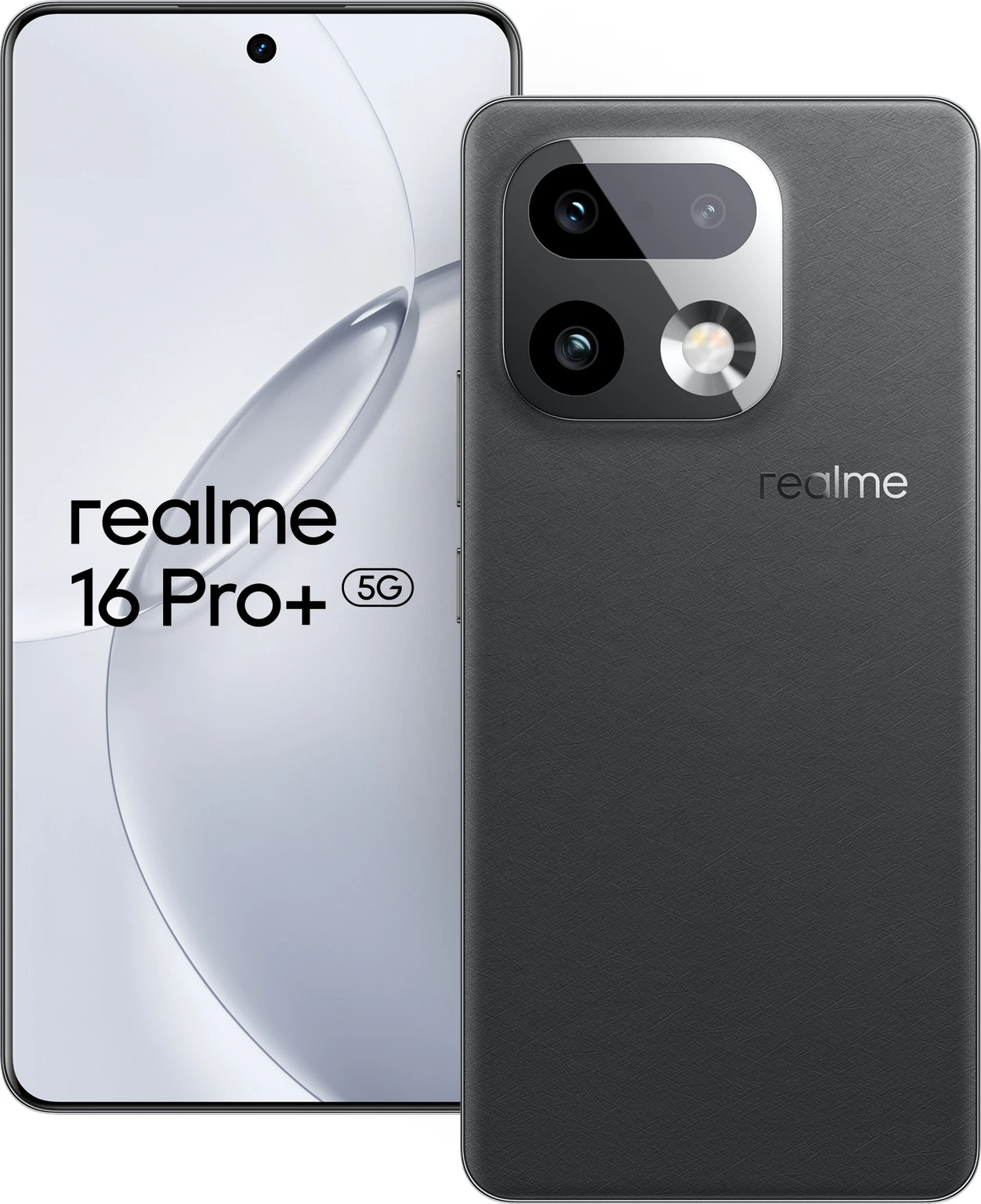
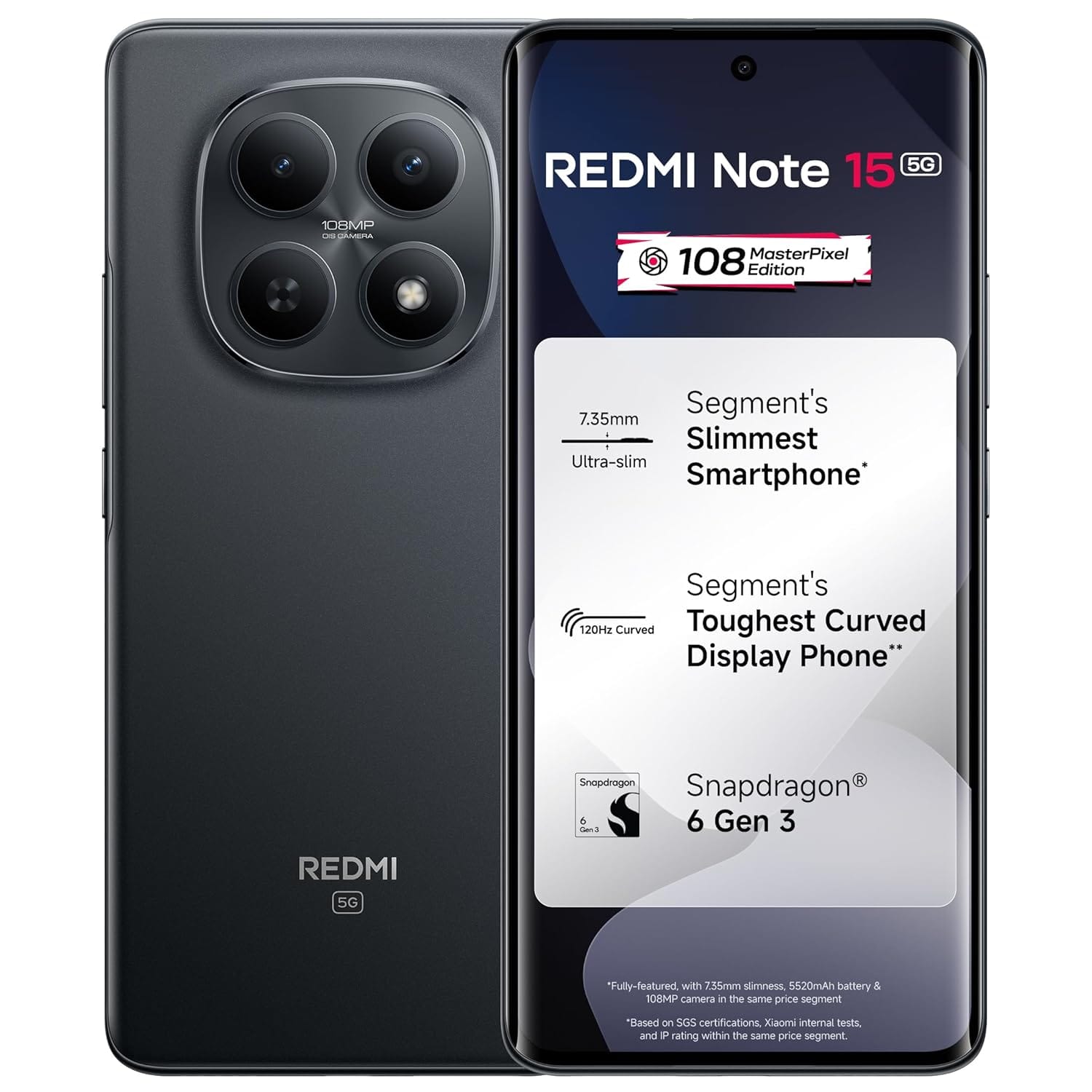
Image Source: Realme (Flipkart) and Redmi (Amazon India). All rights reserved to respective brand owners.
Realme 16 Pro Plus 5G vs Redmi Note 15 5G. Display Comparison: 6,500 Nits vs 3,200 Nits
Display Specs | Realme 16 Pro Plus 5G | Redmi Note 15 5G |
Screen Size | 6.8 inches | 6.77 inches |
Panel Type | Curved AMOLED | Curved AMOLED |
Resolution | 2800 × 1280 (FHD+) | 2392 × 1080 (FHD+) |
Refresh Rate | 144Hz | Up to 120Hz |
Touch Sampling Rate | Not specified | 240Hz |
Normal Brightness | 600 nits | 800 nits (typical) |
HBM Brightness | 1,800 nits | Not listed |
Peak Brightness (APL) | 6,500 nits | 3,200 nits |
Colour Depth | Not specified | 12-bit |
Colour Gamut | DCI-P3 | DCI-P3 wide color gamut |
Contrast Ratio | Not specified | 8,000,000:1 |
PWM Dimming | Not specified | 3840Hz |
Brightness Levels | Not specified | 16,000 levels |
Screen-to-Body Ratio | Not specified | 92% |
Eye Care Certifications | Not listed | TUV Rheinland Low Blue Light, Circadian Friendly, Flicker Free |
Sunlight Display | Yes | Yes |
The Realme 16 Pro Plus 5G takes the raw brightness crown. Its 6,500-nit APL peak brightness is the headline figure, backed by a 144Hz refresh rate and a higher 2800 x 1280 resolution. In direct sunlight, it is among the brightest screens in the mid-range segment.
The Redmi Note 15 5G fights back where it matters most for daily users. Its 3,200-nit display offers 12-bit colour depth, an 8,000,000:1 contrast ratio, 3840Hz PWM dimming, and all three TUV Rheinland eye-care certifications. These are features that protect your eyes during long sessions, something the Realme page does not specify.
One correction from the previous version of this article: the Realme’s 6,500 nits figure refers to APL (Average Picture Level) peak brightness, not sustained screen brightness. Its normal mode sits at 600 nits, while HBM is 1,800 nits.
WINNER: Realme 16 Pro Plus 5G for maximum brightness and refresh rate. Redmi Note 15 5G for eye-care certifications and contrast performance.
Camera System Comparison: Triple vs Dual
Camera Specs | Realme 16 Pro Plus 5G | Redmi Note 15 5G |
Main Camera | 200MP, f/1.8, 6P lens, AF, 2-axis OIS | 108MP, f/1.7, 9-in-1 pixel binning |
| Main Sensor | Samsung HP5 | 0.64um pixel, 1.92um (9-in-1) |
Telephoto Camera | 50MP, f/2.8, 4P lens, AF, 2-axis OIS | None |
Optical Zoom | 3.5x optical zoom | No optical zoom |
Max Digital Zoom | 120x | Not specified |
Ultra-wide Camera | 8MP, f/2.2, FOV 115.5°, 5P lens, AF | 8MP, f/2.2 |
Front Camera | 50MP, f/2.4, 5P lens, FOV 86.7°, No AF | 20MP, f/2.2, 4P lens, 1/4″ sensor |
Rear Video (Max) | 4K at 60fps, 4K at 30fps | 4K at 30fps |
Video Stabilisation | 4K 60fps + 4K 30fps + 1080P 60fps OIS | OIS supported |
Slow Motion | 1080P 120fps, 720P 240fps | Not listed |
Pro/Manual Video | 4K 60fps / 4K 30fps / 4K 24fps | Not listed |
| Front Video | 4K 30fps, 1080P 60fps | 1080p at 30fps |
| Camera Modes (Rear) | Photo, Video, Portrait, AI Landscape, Vibe, Night, Pro Video, Pano, Underwater, Starry, Tilt-Shift, Google Lens | Photo, Video, Portrait, Night |
| AI Camera Features | AI Instant Clip, AI Framing Master, LumaColor Engine, AI StyleMe, Vibe Master Mode | Standard AI scene detection |
This table makes the difference unmistakable. The Realme 16 Pro Plus 5G is a three-camera system with a dedicated 50MP periscope telephoto delivering 3.5x optical zoom and up to 120x digital zoom. The Redmi Note 15 5G has no telephoto lens at all.
The main camera gap is also significant. A 200MP Samsung HP5 sensor with 2-axis OIS and support for 4K at 60fps on the Realme sits opposite a 108MP sensor with 4K limited to 30fps on the Redmi. Both have 8MP ultra-wide lenses on the rear.
For selfies, the gap is equally wide. The 50MP front camera on the Realme crushes the 20MP sensor on the Redmi for detail, especially in low light and portrait shooting.
Want another camera-focused mid-ranger worth comparing? Check out the full Nothing Phone 4a specs breakdown before you finalise your shortlist.
WINNER: Realme 16 Pro Plus 5G, clearly. It has more cameras, more zoom, better video, and a superior selfie sensor.
Battery and Charging Comparison: 7,000mAh vs 5,520mAh
Battery & Charging | Realme 16 Pro Plus 5G | Redmi Note 15 5G |
Battery Capacity | 7,000mAh (typical) | 5,520mAh (typical) |
Battery Type | Titan Battery | Silicon-Carbon (Si/C) EV-grade |
Charge Cycles | Not specified | Over 80% capacity after 1,600 cycles (~5 years) |
Wired Fast Charging | 80W Ultra Charge (SUPERVOOC) | 45W Turbo Charging |
Charger in Box | Yes, 80W charger included | No adapter included (PD 45W recommended) |
Wireless Charging | Not supported | Not supported (receive) |
Reverse Charging | Not supported | 18W wired reverse charging |
Estimated Full Charge | ~44 minutes (realme Lab) | Not officially stated |
USB Port | USB Type-C | USB Type-C |
The Realme 16 Pro Plus 5G has the larger battery and the faster charger. A 7,000mAh Titan Battery with 80W charging from the box means most users will never run out of power. Realme also includes the 80W adapter in the box. The Redmi Note 15 5G comes with a silicon-carbon battery. Xiaomi’s internal data claims over 80% capacity retention after 1,600 complete charge cycles, which translates to approximately 5 years of daily charging. That is a genuine longevity advantage. The 18W wired reverse charging is also unique in this segment. It lets you use the phone as a portable power bank for earbuds or smartwatches. Note that Xiaomi does not include the 45W charger in the box.
Storage Comparison: UFS 3.1 vs UFS 2.2
| Storage Specs | Realme 16 Pro Plus 5G | Redmi Note 15 5G |
| RAM Type | LPDDR5X | LPDDR4X |
RAM Options | 8GB / 12GB | 8GB (India); 6GB / 8GB / 12GB (Global) |
| Internal Storage | 128GB / 256GB | 128GB / 256GB (India); up to 512GB (Global) |
| Storage Type | UFS 3.1 | UFS 2.2 |
| Expandable Storage | Not supported | Yes, microSD up to 1TB (Hybrid SIM slot) |
| SIM Configuration | Dual SIM (Nano + Nano) | nano SIM 1 + Hybrid (Nano SIM or microSD) |
The Realme 16 Pro Plus 5G uses faster LPDDR5X RAM paired with UFS 3.1 storage. This combination means faster app launches, quicker file transfers, and smoother multitasking under load compared to the LPDDR4X and UFS 2.2 on the Redmi. The Redmi Note 15 5G counters with expandable storage support. The hybrid SIM tray lets you slot in a microSD card up to 1TB instead of a second SIM. The Realme offers no such flexibility. If you need more space, you are locked into the variant you buy.
WINNER: Realme 16 Pro Plus 5G on storage speed. Redmi Note 15 5G on flexibility and expandability.
Software, Features and Build Comparison
Software & Features | Realme 16 Pro Plus 5G | Redmi Note 15 5G |
Operating System | Android 16 | Android 15 |
UI / Skin | Realme UI 7.0 | Xiaomi HyperOS 2 |
OS Update Promise | 4 years of OS updates | Up to 4 major OS upgrades (GSMArena noted) |
Security Updates | 6 years | Not officially confirmed |
Fingerprint | In-display optical fingerprint sensor | In-Screen Fingerprint Sensor |
Face Unlock | Yes | AI Face Unlock |
NFC | Yes | Yes (may vary by market) |
Wi-Fi | Wi-Fi 6 (802.11ax), Wi-Fi 5GHz 160MHz, 2×2 MIMO | Wi-Fi 5 (802.11a/b/g/n/ac), 2.4GHz + 5GHz |
Bluetooth | Not specified on official page | Bluetooth 5.1 |
IR Blaster | Yes (Infrared remote control) | Yes (IR blaster) |
GPS | A-GPS, WLAN + cellular positioning, A-GNSS | GPS L1, GLONASS G1, BDS B1I+B1C, Galileo E1 |
Audio | Not specified on official page | Dual speakers, 300% volume boost, Dolby Atmos, Hi-Res |
Sensors | Proximity, Ambient light, Color temperature, E-compass, Accelerometer, Gyroscope | Virtual proximity, Ambient light, Accelerometer, Electronic compass, IR blaster, Gyroscope |
IP Rating | IP69 Pro (IPX6 + IPX8 + IPX9 + IPX9K) | IP65 + IP66 |
AI Features | Gemini AI, AI Instant Clip, AI Framing Master, AI StyleMe, Breeno Scan | Gemini AI integration |
Glass Protection | Corning Gorilla Glass 7i | High-durability glass (SGS drop-test certified 1.7m onto marble) |
Design / Build | Bio-based Organic Silicone back, Metal frame, 8.09mm–8.49mm thick | High-strength motherboard, reinforced mid-frame, 7.35mm–7.40mm thick |
Weight | ~192g (varies by variant) | 178g |
Colours | Master Gold, Master Grey, Camellia Pink | Black, Glacier Blue, Mist Purple |
Box Contents | Phone, 80W Charger, USB cable, SIM tool, Case, Quick Guide | Phone, USB cable, SIM tool, Case, Quick Guide, Warranty card (no adapter) |
The Realme 16 Pro Plus 5G ships with Android 16 and makes a clear, published commitment to 4 years of OS updates and 6 years of security patches. That is a strong promise for a mid-range phone. The Redmi Note 15 5G launches on Android 15 with HyperOS 2. Xiaomi’s update track record has improved significantly, and the global spec sheet notes up to 4 major OS upgrades. However, Xiaomi has not published a formal security patch commitment for this model. On build quality, the Realme earns an IP69 Pro rating that includes IPX9K protection against high-pressure water jets at high temperature. The Redmi’s IP65 and IP66 covers splash and dust resistance only. The Realme also uses Corning Gorilla Glass 7i. The Redmi uses a high-durability glass that passed SGS drop tests from 1.7 metres face-down onto marble. One area where the Redmi wins convincingly: audio. Dual speakers, Dolby Atmos, Hi-Res certification, and a 300% volume boost claim make it a standout media device for its price. The Realme official India page does not detail audio specs.
Price and Variants Comparison of Both phones
Pricing (India) | Realme 16 Pro Plus 5G | Redmi Note 15 5G |
Starting Price | Rs. 39,999 | Rs. 22,999 |
8GB + 128GB | Rs. 39,999 | Rs. 22,999 |
8GB + 256GB | Not listed | Rs. 24,999 |
12GB + 256GB | Rs. 43,999 | Not available in India |
Available On | Flipkart + Realme India Store | Amazon India + Mi.com India |
Launch Date | January 6, 2026 | January 9, 2026 (sale start) |
Price Segment | Upper mid-range | Budget to mid-range |
Value Assessment | Premium features justify price for power users | Exceptional value for money at entry price |
The gap between starting prices is Rs. 17,000. That is not a trivial difference. It represents the cost of meals, travel, or other essentials for many buyers. The Redmi Note 15 5G gives you a phone that covers every everyday need with quality to spare at Rs. 22,999.
The Realme 16 Pro Plus 5G asks for more because it delivers more, specifically a triple camera system, faster storage, a bigger battery with a faster charger included, Wi-Fi 6, and Android 16 from day one. If you plan to keep the phone for 3 to 4 years, that investment pays off over time.
Flipkart – Realme 16 Pro Plus 5G official listing
Amazon India – Redmi Note 15 5G official listing
Performance Head-to-Head: Snapdragon 7 Gen 4 vs Snapdragon 6 Gen 3
The Snapdragon 7 Gen 4 in the Realme is manufactured on 4nm and clocked at up to 2.8GHz. It is paired with LPDDR5X RAM and UFS 3.1 storage, giving it a multi-layer performance advantage over the Snapdragon 6 Gen 3.
The Snapdragon 6 Gen 3 in the Redmi is also 4nm, with cores clocked up to 2.4GHz. It handles social media, streaming, light gaming, and multitasking without issue. The Adreno 710 GPU manages casual titles well. For GPU-intensive gaming, though, the Realme’s chipset pulls ahead.
For the average buyer who browses Instagram, watches Netflix, takes calls, and chats on WhatsApp all day, the Snapdragon 6 Gen 3 is genuinely sufficient. For gamers, video editors, or anyone pushing the phone hard, the Snapdragon 7 Gen 4 with its AirFlow vapour chamber cooling system is the right choice.
Who Should Buy Which Phone?
Buy the Realme 16 Pro Plus 5G if you…
Want a versatile camera system with genuine optical zoom. Shoot 4K video regularly and need OIS support up to 60fps. Plan to keep this phone for 4 or more years and need long software support. Play demanding games or use the phone for professional content creation. Prefer a charger in the box and maximum battery backup.
Buy the Redmi Note 15 5G if you…
Have a strict budget and want strong returns on every rupee. Primarily shoot in daylight and do not need a telephoto lens. Value audio quality, with Dolby Atmos and dual speaker certification. Want a lighter, slimmer phone at 178g and 7.35mm. Need expandable storage flexibility with a microSD card. Want a battery that stays healthy for 5 years of daily charging.
Conclusion
The Realme 16 Pro Plus 5G wins this comparison on raw hardware. It has the brighter display with a higher refresh rate, the more capable triple camera with genuine optical zoom, a larger and faster-charging battery, quicker storage, a more powerful chip, better water resistance, and a longer confirmed software update cycle. The Redmi Note 15 5G is not a runner-up in any shameful sense. It is one of the best smartphones available under Rs. 25,000 in India right now. The silicon-carbon battery, the certified eye-care display, the Dolby Atmos speakers, and the 18W reverse charging make it a genuinely thoughtful piece of hardware at its price. If your budget stretches, buy the Realme. You will feel every rupee of that difference in how it performs. If it does not, the Redmi Note 15 5G will not disappoint you.
Frequently Asked Questions (FAQ)
Is the 6,500-nit brightness on the Realme 16 Pro Plus 5G accurate?
Yes, but it refers to APL (Average Picture Level) peak brightness, not the sustained screen brightness. The normal brightness is 600 nits, HBM is 1,800 nits, and the 6,500-nit figure appears only under specific peak conditions. This data is from Realme’s official India specifications page.
Does the Redmi Note 15 5G include a charger in the box?
No. Xiaomi’s official India page states no power adapter is included. It recommends using a 45W PD-compatible charger or Xiaomi’s official 45W adapter, sold separately. The Realme 16 Pro Plus 5G does include its 80W charger in the box.
Which phone has expandable storage?
Only the Redmi Note 15 5G supports expandable storage, via a hybrid SIM tray that accepts a microSD card up to 1TB. The Realme 16 Pro Plus 5G does not support expandable storage in any variant.
Which smartphone is better, Realme 16 Pro Plus 5G or Redmi Note 15 5G?
The Realme 16 Pro Plus 5G offers better overall specifications including a higher refresh rate display, stronger processor, advanced camera system, and larger battery. The Redmi Note 15 5G is more affordable and suitable for users who want balanced performance at a lower price.
Does Realme 16 Pro Plus 5G have a better camera than Redmi Note 15 5G?
Yes. The Realme 16 Pro Plus 5G includes a higher resolution main camera and an additional telephoto lens, which improves zoom photography and portrait shots compared to the Redmi Note 15 5G.
Which phone has better battery life?
The Realme 16 Pro Plus 5G has a larger battery capacity, which typically results in longer usage time. This makes it more suitable for heavy users, gamers, and content consumers.
Is Redmi Note 15 5G good for gaming?
The Redmi Note 15 5G can handle casual and moderate gaming, but the Realme 16 Pro Plus 5G performs better in demanding games due to its stronger processor and higher refresh rate display.
Does the Redmi Note 15 5G support wireless charging
The Redmi Note 15 5G does not support wireless charging for receiving power, but it does support 18W wired reverse charging, which lets you charge other devices using your phone as the power source. The Realme 16 Pro Plus 5G does not offer either wireless or reverse charging.
All specifications verified from official brand sources: realme.com/in (Realme 16 Pro Plus 5G) and mi.com/in (Redmi Note 15 5G). Data current as of March 2026. Prices and availability may vary.
Before you decide, also read our comparison of the Best Google Pixel 10a alternatives for every budget in 2026.
Also check our full spec breakdown of the Nothing Phone 4a and what makes it worth considering as another mid-range option.
Source: CoreBrief Smartphone Comparison Analysis 2026